Kite Reviews
Delta vs Diamond vs Parafoil: Comparing the Three Most Common Kite Types
Three shapes dominate the sky on any decent breeze: the triangle of a delta, the classic diamond trailing a long tail, and the soft, celled pillow of a parafoil. All three turn wind into lift, but they do it in different ways, and those differences matter most on the days when the wind is not behaving. Here is how they compare on the things that actually decide whether you enjoy the afternoon.
The three designs in a nutshell
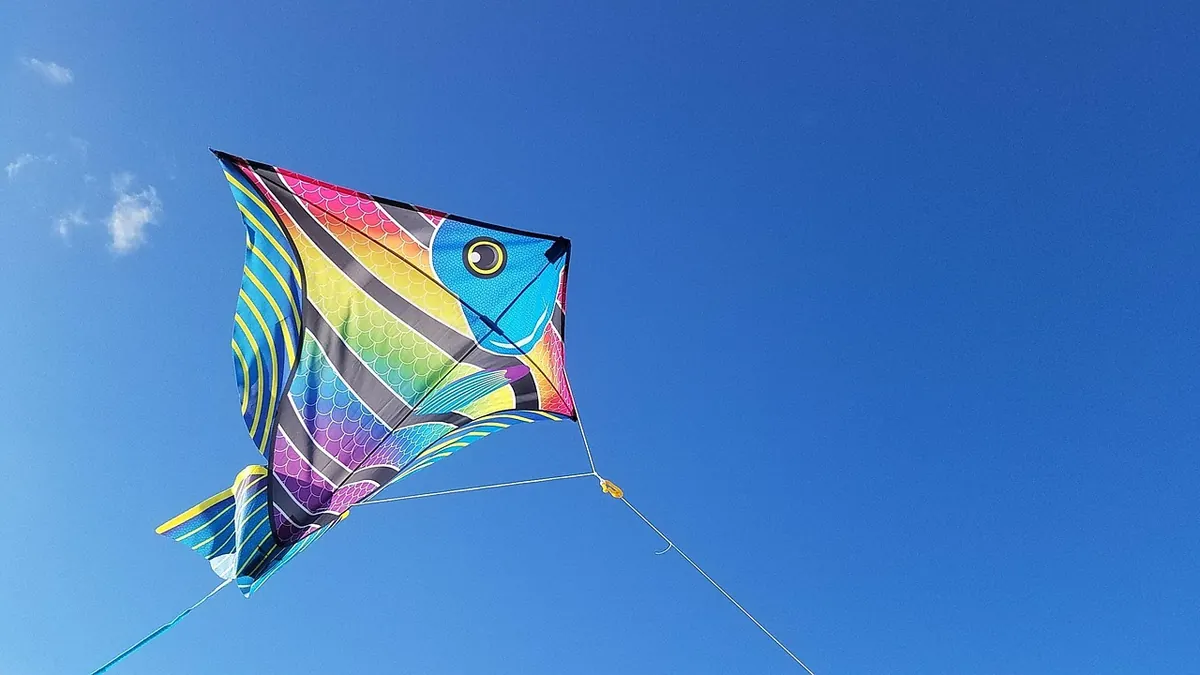
The delta is the modern default. A triangular wing held open by a spine and a spreader, with a keel or bridle underneath that keeps it pointing into wind. That keel is why a decent delta will sit quietly overhead while you stand there holding a line: it does the steering for you. Most beginner deltas are single-line; larger two-line deltas are steerable and much quicker.
The diamond is the kite your grandparents flew. A rhombus of fabric over two crossed spars, usually with a long ribbon tail clipped to the bottom point. That tail is not decoration. It adds drag, which stops the kite from looping wildly and keeps it visible against a grey sky. Diamonds are cheap, fold flat, and need almost no assembly, but they fly in a narrower band of wind than the other two — too little and they sink, too much and they spin.
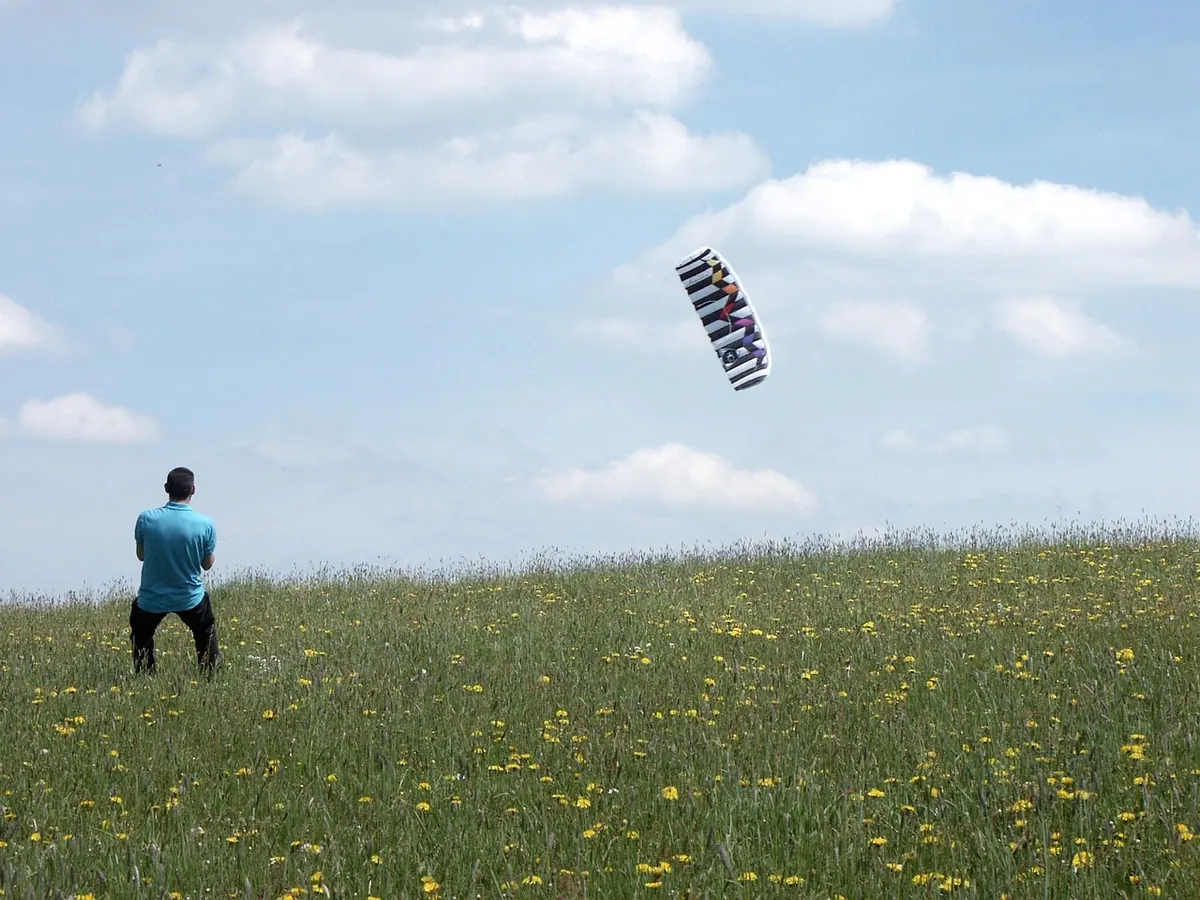
The parafoil has no spars at all. Fabric is sewn into a row of open-ended cells, and the wind inflates them until the whole thing holds its shape like a mattress. Nothing rigid means nothing to snap, and the entire kite crushes down into a stuff sack the size of a loaf of bread. The trade-off is that it needs a little wind to inflate in the first place, and a big one pulls hard enough to drag an adult across a beach.
Rule of thumb: spars give precision, tails give stability, and cells give power.
How they behave when the wind misbehaves
Wind is rarely the polite, steady ten miles an hour the packaging promises. It gusts, it drops, it swirls around the treeline at the edge of the field. This is where the shapes really separate.
- Light, patchy breeze: the delta wins. Light fabric, a large wing area, and a keel that keeps it facing the wind mean it will stay up in air that leaves a diamond lying on the grass.
- Steady, moderate breeze: all three are happy. This is the diamond's narrow window, and in it the kite flies beautifully — docile, predictable, and cheap to replace when a gust finally eats it.
- Strong, gusty wind: the parafoil is the calm one. It absorbs gusts by flexing and shifting its shape, so it surges instead of lurching. A rigid delta in the same wind will overfly, bow its spars, and eventually dive.
That last point is worth dwelling on. A delta or a diamond has a fixed frame, so a sudden gust has nowhere to go but into the spars. A parafoil has no frame to load, which is exactly why the serious power kites — the ones people use to pull buggies and jump off dunes — are almost all foils.
Setup, packing, and travel
Portability is the practical difference nobody mentions until they are standing in a car park at dusk, trying to fold a kite in the dark.
- Diamond: unfold, slot two spars, clip the tail, done. About sixty seconds. It packs long and thin, and the tail will tangle with everything else in the bag.
- Delta: two or three spars and a bridle to untwist. Two minutes once you know the routine. Packs as a bundle of rods roughly the length of the spine, so it travels badly on a bicycle.
- Parafoil: pull it out of the sack, shake it open, let the wind do the rest. Ten seconds, and no loose parts to lose in the grass. This is the one that fits in a rucksack next to a water bottle.
Flying feel and steering
A single-line delta is about as relaxing as flying gets: you clip the line, let it out, and the kite parks itself overhead. Two-line deltas are a different animal — fast, twitchy, and capable of tight loops and figure-eights once you learn to brake with both hands.
Diamonds are the least responsive of the three. They turn slowly, they dislike sharp inputs, and most people fly them single-line on a short line and simply watch. Parafoils sit between the two by design: a small one is a gentle two-line trainer, while a large four-line foil is a genuine traction engine with brakes, reverse launch, and enough pull to make you lean back on your heels.
Which one is right for you?
- Flying with kids in a small park: a mid-size single-line delta. Forgiving, easy to relaunch, no tail to untangle.
- The cheapest possible afternoon of fun: a diamond with a long tail. Nothing beats it for the money.
- Beach trips, camping, or hiking: a parafoil. No spars to break in the car, no sand working its way into the joints.
- Learning to steer: a small two-line foil or a two-line delta. Foils are more forgiving of crashes because nothing snaps.
- Serious pull: a four-line parafoil, plus a harness and a healthy respect for the wind.
Care, repair, and what breaks first
The weak point of each design
- Deltas and diamonds: the spars. Fibreglass and carbon rods split at the ferrule, and the leading edge takes the hit on every nose-dive. Carry a spare set; they cost almost nothing.
- Parafoils: the bridle lines and the seams. A foil dragged across sand will slowly abrade its bridle, which changes the kite's angle of attack and makes it fly badly. Rinse it, dry it, and compare the bridle lines against each other for length.
- All three: the flying line. A sun-bleached line loses strength quietly, and the swivel or clip is usually the part that fails after a season of use.
Store everything dry and loosely folded. A kite packed away wet will grow mildew in a week, and a parafoil packed away wet will grow mildew and smell like a damp tent for the rest of its life.
The short version
Buy a delta if you want the easiest, most reliable kite across the widest range of days. Buy a diamond if you want the cheapest, simplest, most nostalgic option and you can count on a steady breeze. Buy a parafoil if you want something that travels well, survives crashes, and can grow with you into real traction flying. Most people who fly often end up owning at least two of the three — a delta for the calm evenings, a foil for everything else, and a diamond hanging in the garage for the grandchildren.
Photo: danielmills / Pixabay